
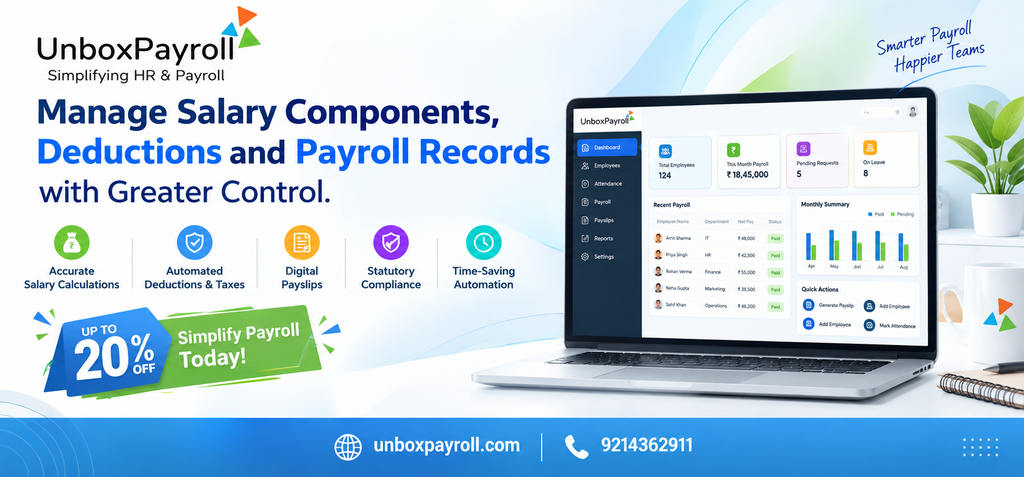
Salary processing involves more than transferring money to employees at the end of the month. Businesses must maintain accurate salary structures, account for earnings and deductions, review attendance-related adjustments, prepare payslips and keep payroll records organized for future reference.
When these activities are managed through disconnected spreadsheets and manual calculations, even a small change can create additional work. An updated salary, an approved deduction or a missed attendance entry may require several records to be checked before payroll can be finalized.
For businesses evaluating Payroll Management Software in Jaipur, the priority should be a system that organizes salary components, applies configured payroll rules, supports review and maintains useful employee payroll records. The right solution helps HR and finance teams follow a more consistent process while retaining responsibility for checking calculations and approving payroll.
Why Salary Components Need Proper Management
A salary structure defines the different elements that make up an employee’s compensation. These elements may include basic pay, allowances, incentives, bonuses and other earnings, depending on the employment arrangement and company policy.
Deductions may include applicable tax deductions, employee contributions, approved recoveries and other amounts that must be handled according to the relevant rules.
Each component needs a clear purpose and appropriate treatment in the payroll calculation. If the structure is unclear, the payroll team may struggle to explain how gross earnings, total deductions and net salary were calculated.
For example, when an employee receives a salary revision, the HR team may need to update the employee’s compensation details and confirm the effective date. The payroll team then needs to ensure that the revised figures are applied to the correct payroll period.
A structured payroll system can help maintain these components in an organized way, making changes easier to review and reducing unnecessary manual re-entry.
Key Features to Look for in Payroll Management Software
Not every business needs the same level of payroll functionality. However, certain capabilities are particularly useful when managing employee earnings, deductions and payroll records.
1. Flexible Salary Component Management
Salary structures can differ between employees, departments, roles and employment arrangements. A useful payroll system should allow the business to define the earning and deduction components it actually uses.
Look for the ability to:
- Maintain clearly named earning and deduction heads.
- Configure salary components according to the company’s payroll structure.
- Review changes to employee compensation before processing payroll.
- Apply the appropriate components to the relevant employees.
- Check how changes affect gross earnings and net salary.
The software should also make it clear which components are fixed, variable or dependent on particular conditions.
Before selecting a product, demonstrate a realistic salary revision or component change. Confirm how the change is entered, checked and applied to the intended payroll period.
2. Accurate Deduction Tracking
Deductions require careful handling because they directly affect an employee’s take-home salary. Businesses may need to account for applicable statutory deductions, tax withholding, employee contributions, loan recoveries and other authorized adjustments.
A payroll system should help distinguish between different deduction types and apply the appropriate configuration. It should also allow the payroll team to review deduction values before finalizing salary calculations.
For example, an employee’s loan recovery may change after an approved adjustment. The payroll team should be able to verify the revised recovery amount and confirm that it has been applied correctly.
When assessing payroll software in Jaipur, ask how deduction rules are configured, how changes are controlled and whether the resulting calculations can be reviewed before payroll is finalized.
Software can assist with calculations and recordkeeping, but the employer must ensure that deductions are lawful, authorized where required and consistent with the employee’s circumstances.
3. Attendance and Leave Reconciliation
Attendance records often influence payroll calculations. Unapproved absences, overtime arrangements, approved leave and attendance corrections may affect salary depending on company policy and applicable rules.
If attendance and payroll information are maintained separately, the payroll team may need to reconcile multiple spreadsheets before processing salaries.
A suitable system should support the attendance review process and help the team identify discrepancies before payroll calculations are completed.
For instance, if an employee’s attendance record is incomplete, the team should resolve the discrepancy before relying on that information for a salary adjustment.
Businesses should confirm whether their chosen software supports the attendance methods, shift patterns, leave policies and approval workflows they use. Integration between attendance and payroll should never be assumed without verification.
4. Payslip Generation and Payroll Records
Payslips help employees understand how their salary has been calculated. They typically present relevant earnings, deductions and net pay for a particular payroll period.
Maintaining consistent payslips and payroll records also helps HR and finance teams answer questions about previous payments, salary changes and deduction amounts Know More .
Useful capabilities may include:
- Generating employee payslips for each payroll period.
- Maintaining salary registers and employee-wise salary records.
- Retrieving historical payroll information when authorized.
- Producing relevant reports for internal review.
- Providing employees with access to their payroll documents where supported.
Unbox Payroll lists salary slips, certificates and registers among its published features, along with earning and deduction heads.
When comparing software, check which records are available, how they can be retrieved and whether access permissions can be configured to protect confidential information.
5. Loan and Advance Management
Some organizations provide employees with salary advances or loans that are recovered through an agreed process. These transactions should be recorded clearly so that the outstanding balance and any payroll recovery can be reviewed.
A dedicated module may help track the original amount, approved recovery arrangements and related transactions. It is important to confirm whether the software supports the organization’s actual loan policies and how adjustments are reflected in payroll records.
Unbox Payroll lists a Loan and Advances module for tracking, managing and reconciling employee loans and advances.
This capability may be useful for businesses that want to maintain loan records alongside other payroll information rather than managing every recovery through separate spreadsheets.
How Payroll Software Improves Control Over the Monthly Payroll Process
Payroll becomes easier to manage when each stage has a clear sequence and the necessary information is available for review.
A structured monthly workflow generally follows these steps:
Step 1: Update employee information. Confirm new joiners, exits, salary revisions and other changes that affect the current payroll period.
Step 2: Review attendance and leave. Check relevant attendance records, approved leave and any unresolved discrepancies that could affect salary.
Step 3: Verify salary components. Confirm the applicable earnings, allowances, incentives and other salary elements for each employee.
Step 4: Review deductions. Check applicable tax deductions, employee contributions, approved recoveries and other configured adjustments.
Step 5: Validate payroll calculations. Review gross earnings, total deductions and net salary. Investigate unusual differences before final approval.
Step 6: Generate payroll documents and reports. Prepare payslips, salary registers and other required records, then store them according to the organization’s recordkeeping process.
Step 7: Finalize and retain records. Follow the company’s authorization and payment procedures and preserve the records needed for future reference.
Payroll software can support several of these steps through configured calculations, organized records and reporting. However, the precise workflow depends on the product, its configuration and the organization’s internal controls.
Choosing the Right Payroll Solution for a Jaipur Business
Businesses in Jaipur may have different payroll requirements depending on workforce size, industry, salary structures and working arrangements. A small office-based team may have straightforward payroll needs, while a growing business with shift workers, variable earnings or multiple departments may require more detailed controls.
When evaluating the best payroll software in Jaipur, compare the software against your actual payroll process rather than relying on a generic feature checklist.
| Evaluation area | What to verify |
| Salary structures | Can the system represent your earning and deduction components? |
| Payroll calculations | Can the required rules be configured and reviewed? |
| Attendance | Does it support your attendance and leave procedures? |
| Payroll records | Can you generate and retrieve the required payslips and registers? |
| Statutory requirements | Does it support the obligations applicable to your business, and how are changes handled? |
| Access controls | Can access to salary information be limited appropriately? |
| Reporting | Are the reports needed by HR, finance and management available? |
| Support and cost | Are setup, training, support and recurring charges clearly explained? |
For businesses considering online payroll software in Jaipur, also check the available access methods, data protection arrangements, backup policies and options for exporting records. If the team needs to access payroll information from different locations, confirm how that access works and what security controls are provided.
The most suitable solution should support your current requirements without creating unnecessary administrative complexity or costs.
Indian Payroll Compliance and Recordkeeping
Payroll records need to be handled with care because salary calculations can involve tax, employee contributions and other statutory obligations.
Requirements may depend on the applicable legislation, establishment, employee circumstances, salary components and effective dates. Businesses should therefore verify current rules through authoritative sources and obtain qualified advice when necessary.
When evaluating payroll software, ask whether the relevant statutory components and reports are supported, how configurations are updated and what review procedures are available. Do not assume that the presence of a statutory module automatically means every obligation is satisfied.
The employer remains responsible for providing correct employee information, applying the appropriate rules, reviewing calculations and meeting applicable filing, payment and recordkeeping obligations.
A well-organized payroll process can make these responsibilities easier to manage, but software should support—not replace—appropriate oversight.
Common Payroll Management Mistakes to Avoid
Even with software, weak payroll procedures can create errors. Businesses should pay particular attention to the following issues.
- Unclear salary structures: Define earning and deduction components consistently so that payroll calculations can be understood and reviewed.
- Late employee updates: Establish a cutoff for reporting salary revisions, new joiners, exits and other payroll changes.
- Unverified attendance adjustments: Resolve discrepancies before using attendance information in salary calculations.
- Insufficient review: Compare payroll outputs with expected results and investigate unusual changes before final approval.
- Poor access management: Restrict confidential salary information to authorized users and review access when responsibilities change.
- Incomplete records: Retain relevant payslips, registers, approvals and supporting information according to the business’s recordkeeping requirements.
The aim is not to remove every manual check. It is to make the process consistent, traceable and easier to review.
How Unbox Payroll Can Support Salary and Deduction Management
Unbox Payroll provides payroll and HR capabilities that businesses can assess against their operational needs. Its published website describes earning and deduction heads, payroll processing, salary slips and registers, loan and advance management, attendance management and payroll-related reporting.
These features are relevant to businesses seeking a more structured way to organize employee salary information, maintain payroll records and manage recurring payroll activities.
Before choosing a system, compare its available capabilities with your salary structure, deduction rules, reporting needs and approval process. Ask for a demonstration using realistic payroll scenarios so that your HR and finance teams can evaluate how the software fits their work.
Conclusion
Managing salary components, deductions and payroll records requires consistent information and a reliable review process. Businesses can improve control by defining salary structures clearly, checking attendance-related adjustments, reviewing deductions and maintaining accurate payroll documents.
For companies searching for Payroll Management Software in Jaipur, the right choice is a system that fits their salary structure, supports the records they need and helps the payroll team follow a consistent process.
Evaluate the software through practical demonstrations, verify the features relevant to your business and ensure that appropriate payroll and compliance checks remain part of your workflow.
Frequently Asked Questions
1. What is payroll management software used for?
Payroll management software helps businesses organize salary calculations, employee earnings, deductions, payslips and payroll records. Depending on the product, it may also support attendance reconciliation, payroll reports and statutory components. The exact capabilities vary by provider, so businesses should confirm that the system supports their specific payroll requirements.
2. Can payroll software manage different salary structures?
Many payroll systems allow businesses to configure different earning and deduction components for employees or employee groups. Before choosing a solution, check whether it can represent your salary structures, handle changes with appropriate effective dates and produce calculations that the payroll team can review.
3. How does payroll software help track deductions?
Payroll software can organize configured deduction types and apply calculation rules to employee payroll records. It may also produce reports that help the team review deduction amounts. Businesses must still verify the configuration, employee information, applicable rules and authorization for deductions before finalizing payroll.
4. What payroll reports should a business maintain?
Commonly useful records include employee payslips, salary registers, employee-wise salary reports and relevant deduction or contribution reports. The exact records required depend on the business and its legal obligations. Companies should identify their internal reporting needs and verify applicable statutory recordkeeping requirements with qualified professionals.
5. Is online payroll software suitable for small businesses in Jaipur?
It can be suitable if the system supports the company’s salary structure, employee count, deduction rules and reporting needs at a reasonable total cost. Small businesses should also evaluate ease of use, access permissions, support, data protection and the ability to retrieve payroll records when needed.
6. Does payroll software guarantee accurate and compliant salary processing?
No software can guarantee correct results in every situation. Accuracy depends on the quality of employee data, the configuration of salary components and deductions, and the review process. Compliance also depends on applicable rules and how the business applies them. Organizations should review payroll outputs and verify current legal requirements.